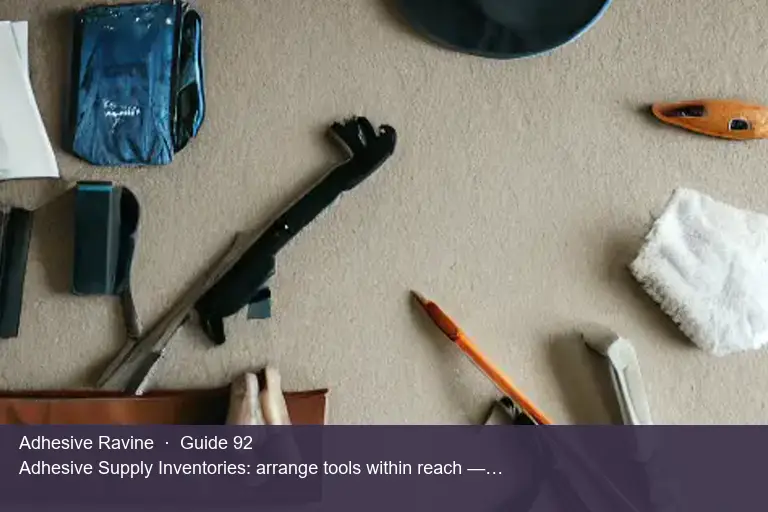
Adhesive Supply Inventories: arrange tools within reach — setup audit for mixed material sizes; setup for two people
### Adhesive Supply Inventories: Arrange Tools Within Reach
Adhesive supply inventories can be intimidating for adults in their 50s and 60s, especially when dealing with mixed material sizes. To help them organize their supplies efficiently, it's essential to consider the practical task of arranging tools within reach for adhesive inventories. This task involves the following steps: selecting the right tools, setting up the inventory, and arranging them within reach.
#### Step 1: Select the Right Tools
First, the adult needs to select the appropriate tools for their adhesive needs. This could vary depending on the size of the adhesive mix and the type of adhesive they are using. For example, a smaller batch size may require a different type of adhesive or a different size of equipment.
Once the tools are selected, the adult needs to ensure they have the right tools to work with. This includes the adhesive mix, the tools needed for mixing, and any other tools required for the job. If the adult has a tool kit, they can quickly select the necessary tools and set up the inventory.
#### Step 2: Set Up the Inventory
After selecting the right tools, the adult needs to set up the inventory. This involves the following steps: determining the number of adhesive mixes, the number of tools needed for each mix, and the total number of tools needed. Then, the adult needs to arrange the tools within reach, prioritizing the most frequently used tools first.
For example, if the adult has a 200g batch of adhesive, they would need 30 adhesive mixes. Each mix would require 50 tools, and the total number of tools needed would be 1500. The adult would arrange the tools within reach, starting with the most frequently used tools and prioritizing the less frequently used tools.
#### Step 3: Arrange the Tools within Reach
After setting up the inventory, the adult needs to arrange the tools within reach. This involves the following steps: grouping the tools in a logical order, placing them in a way that allows easy access, and ensuring the tools are not obstructing the work area.
For example, the adult might arrange the tools in a 10x15 grid, with the adhesive mixes at the top left and tools at the bottom right. This arrangement ensures the tools are easily accessible for the adult to use at a glance. The adult should also remove any tools that are not being used and place them in a way that improves accessibility.
#### Step 4: Verify the Arrangement
Finally, the adult should verify the arrangement to ensure that the tools are in a logical order and are easily accessible. This involves checking that the tools are not obstructing the work area and that the adult can easily access the tools when needed.
#### Step 5: Set Up for Mixed Material Sizes
To help with mixed material sizes, the adult needs to consider the size of the adhesive mix and the size of the tools needed. For example, a 200g batch of adhesive may require 10 tools for each mix. The adult would need to arrange the tools within reach, prioritizing the most frequently used tools first.
To ensure the tools are easily accessible, the adult might place the tools in a 10x15 grid, with the adhesive mixes at the top left and tools at the bottom right. The adult would remove any tools that are not being used and place them in a way that improves accessibility.
By following these steps, the adult can effectively arrange tools within reach for adhesive supply inventories, making it easier to organize their supplies and manage mixed material sizes.