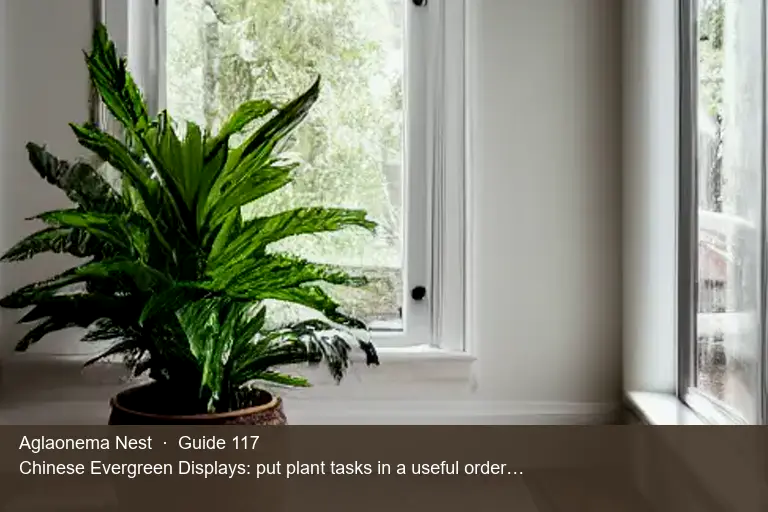
Chinese Evergreen Displays: put plant tasks in a useful order — question guide for a temporary work area; setup in small spaces
Evergreen displays, like Chinese evergreen displays, are ideal for temporary work areas as they can be easily moved to other locations as needed. However, for a Chinese evergreen display to be effective, tasks should be arranged in a logical, systematic manner. Here are three practical steps to help you put plant tasks in a useful order for your Chinese evergreen display.
- **Identify the Goals**: The first step is to clearly define the goals of your Chinese evergreen display. For example, you might want to display a collection of plants that you have recently acquired, or a display for a specific occasion or theme. Knowing your goals will help you decide how to structure your display.
- **Define the Tasks**: Next, you need to identify the tasks that you want to accomplish with your Chinese evergreen display. For instance, you might want to display a variety of plants, such as a display of indoor plants, a display of outdoor plants, or a display of a specific plant family. Knowing the tasks will help you decide the order in which you want to display them.
- **Arrange the Tasks**: Now, you need to arrange the tasks in a logical, systematic manner. For instance, you might want to display the plants in a specific order, such as from the tallest to the shortest. You might also want to display the plants in a specific sequence, such as from the most common to the rarest. You might want to display the plants in a specific order, such as from the most frequently used to the least frequently used.
- **Use a Systematic Approach**: A systematic approach is essential when displaying a Chinese evergreen display. Use a system that works for you and that is easy to follow. For instance, you might use a system of steps, such as: display the plants in the order of their size, from the tallest to the smallest. You might use a system of colors, such as: display the plants in the order of their color, from the most common to the rarest. You might use a system of heights, such as: display the plants in the order of their height, from the tallest to the shortest. You might use a system of time, such as: display the plants in the order of their time of planting, from the earliest to the latest.
- **Test the System**: Once you have arranged the tasks, test the system to make sure that it is working as intended. If something is not working as expected, you can make adjustments to the system until it works. For instance, if you notice that the plants are not being displayed in the order you want, you can adjust the system to display them in the order you want.
By following these steps, you can create a Chinese evergreen display that is easy to display, easy to organize, and easy to use.
Use this guide