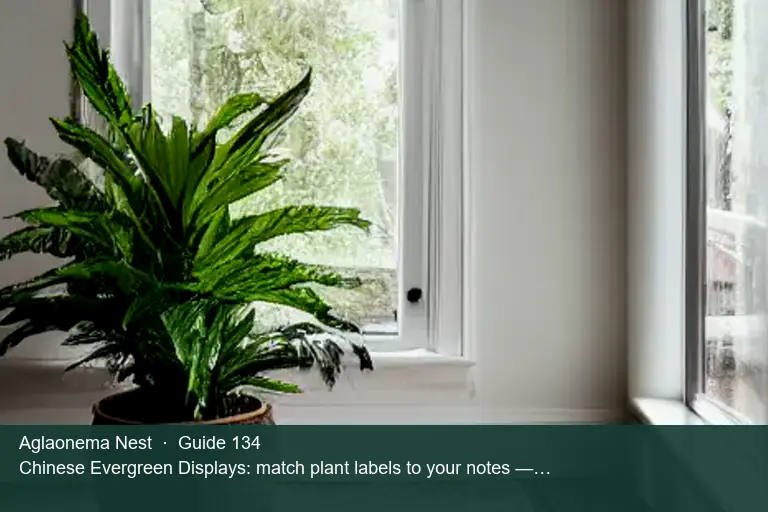
Chinese Evergreen Displays: match plant labels to your notes — measurement guide for incomplete plant labels; setup in small spaces
Evergreen displays are a popular way to display plants in a small space. However, with incomplete plant labels, it can be challenging to match the labels to the plants. This guide will show you how to use Chinese evergreen displays to match plant labels to your notes. The first step is to decide which plants you want to display. Consider the size, shape, and care requirements of each plant before making your choices. Once you have your list of plants, you can start matching the labels to the plants.
In Chinese evergreen displays, the labels are typically placed at the top of the display, with the plant name and care instructions written at the bottom. This is a good place to start, as it allows you to look at the label first before reading the care instructions. The next step is to scan the label for a word or phrase that matches the plant name. If you find a match, you can copy the name and care instructions and use them to display the plant. If you do not find a match, you can try to find a different word or phrase that might fit the plant name. As you match more labels, you will find a greater number of matches, making it easier to display the plants.
Once you have matched the plants, you can start displaying them. You can use the Chinese evergreen display to display the plants in a hanging or hanging-up arrangement. Alternatively, you can use it to display the plants in a hanging-down arrangement. For hanging-down arrangements, you can use the Chinese evergreen display to display the plants in a hanging-down arrangement. In either case, the Chinese evergreen display will make it easy to display the plants.
In summary, Chinese evergreen displays can be a useful tool to match plant labels to your notes. With a little practice, you can use Chinese evergreen displays to display the plants in a small space.